ADDItionAL Treatments
PHOTOBIOMODULATION: LIGHT THERAPY TO SUPPORT PAIN CARE
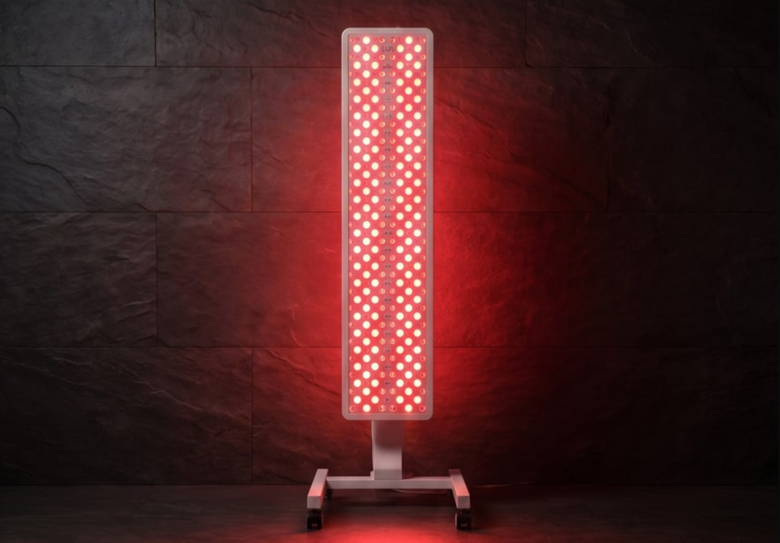
Photobiomodulation—also called red and near-infrared light therapy—offers a non-invasive option that may complement your chronic pain treatment plan. NICHE Pain Care now has as an additional service for patients living with pain wishing to pursue non-invasive and low risk alternative treatments: two Hale Health Pro panels that meet Health Canada Class II medical licensing standards, full body size, with 8 wave-lengths (ranging 630 to 1060, with irradiance of >197 mW/cm3 at 6 inches). Investing in the highest quality panels ensures our patients receive sufficient doses for a better chance of results.
-
Specific wavelengths of light are absorbed by cells and may influence energy production, inflammation and pain signalling. Treatment does not involve needles or ultraviolet (UV) light.
-
Some people with fibromyalgia or other chronic pain conditions may experience less pain and improved comfort or ability to participate in daily activities. Responses vary, and improvement is not guaranteed.
-
You sit or stand comfortably near a light panel while the treatment area is exposed. Full undressing is not required; clothing can be adjusted to uncover the skin being treated while maintaining your privacy. Protective eyewear is used as directed. You may notice gentle warmth, but treatment should feel comfortable. Session length is recommended between 5-8 minutes, and session frequency is recommended at twice a week for a minimum of 6 weeks to see results, based on studies showing positive results for pain. While one treatment may provide an opportunity to determine tolerability, it would not be expected sufficient to provide a noticeable reduction of pain.
-
Some clinical trials suggest benefits for fibromyalgia and certain other pain conditions. However, studies are often small, results vary, and devices and treatment schedules differ. More research is needed to establish who benefits most and how long improvements last. See this link for a list of research publications in the field of pain: Pain Research Studies.
-
Trial session: $40/5 minutes
Package: $350/12 sessions recommended twice weekly for 6 weeks to determine benefits)
Photobiomodulation is not a cure. It complements interdisciplinary care, including movement, education, psychological support, sleep strategies and medications when appropriate.
Coming January 2027
Prolotherapy: Supporting Healing And Movement
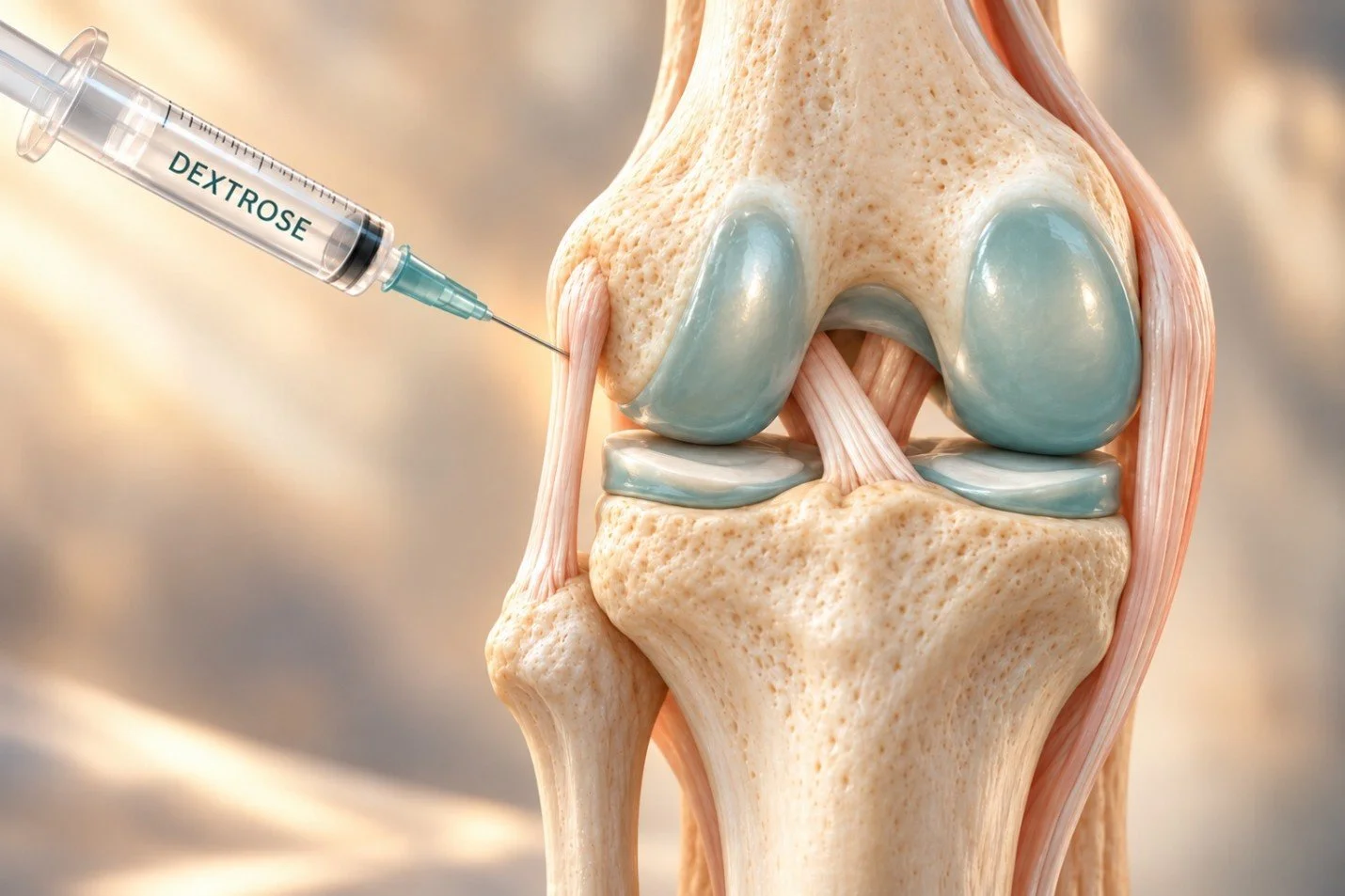
Prolotherapy is a regenerative injection treatment intended to support the body’s natural repair processes. It involves injecting small amounts of a dextrose (a type of sugar), into or around selected joints, tendons or ligaments. The purpose is to stimulate a local healing response and may influence pain signalling, although its exact effects are still being studied.
-
For some people with persistent joint or tendon-related pain, prolotherapy may help reduce discomfort and improve movement and everyday function. Research has shown benefits in some conditions, but findings are mixed and many studies are small. The best evidence thus far is for knee pain: A Comprehensive Update of Prolotherapy in the Management of Osteoarthritis of the Knee - PMC. Although prolotherapy is described as regenerative, reliable tissue regrowth or repair has not been established in people. Benefits vary, and it is not a cure for everyone.
-
Before treatment, your doctor will assess your symptoms, discuss your goals, and review potential benefits, risks and alternatives. During a session, the skin is cleaned and a fine needle is used to deliver the injections. You may feel brief stinging or pressure, followed by temporary soreness, swelling or bruising. Less common risks include infection or injury to nearby structures. A series of sessions is typically recommended, as benefits are generally incremental and cumulative, and usually tailored to your response.
-
Pricing: Private MD consultation $250 (45 minutes)
Prolotherapy injection $250/treatment (typically 20-30 minutes)
At NICHE Pain Care, prolotherapy complements interdisciplinary chronic pain care, including rehabilitation, movement, education and other individualized supports.
Platelet-Rich Plasma (PRP): Supporting Your Body’s Healing Response
Healing after an injury involves a well-orchestrated and complex series of events, where proteins in the blood act as messengers to regulate the healing process. Many proteins involved in the healing process are recovered from small cell fragments found in blood called platelets, which after injury can activate, gather at an injury site to release beneficial proteins called growth factors to start the healing cascade.
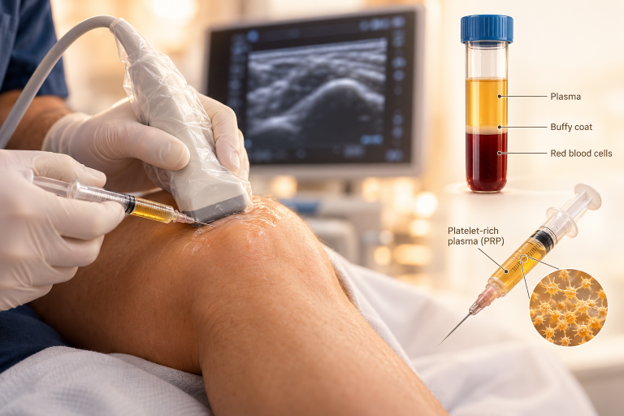
Platelet-rich plasma (PRP) is a regenerative treatment that uses a concentrated portion of your own blood to support your body’s natural healing response. It may be considered for selected causes of joint pain, tendon injuries and ligament sprains.
-
Platelets contain growth factors and other signalling proteins involved in tissue repair. Injecting concentrated platelets into a targeted area aims to influence inflammation and support healing. For some people, this may reduce pain and improve movement and daily function.
-
During your appointment, a small blood sample is collected and processed in a centrifuge to concentrate the platelets. The PRP is then injected into the affected area, in our centre using ultrasound guidance. Temporary soreness, swelling or a pain flare can occur; bleeding and infection are less common risks. Your clinician will explain aftercare and a gradual return to activity. Any improvement usually develops over weeks to months.
-
Research is promising for some conditions, particularly knee osteoarthritis, but results vary. Evidence for tendon problems is mixed, and evidence for ligament injuries remains limited. See a systematic review here: Frontiers | Platelet-rich plasma in the management of musculoskeletal disorders: a narrative review of clinical evidence and practical considerations. Although described as regenerative, PRP has not been proven to reliably regrow cartilage or restore damaged tissue. It is not a cure, and some people experience little or no benefit.
-
Pricing: MD Consultation $250 (45 minutes)
Platelet rich plasma injection: $1200/treatment (1 hour)
NICHE Pain Care has invested in the Arthrex Angel system that allows for concentration of platelets up to 18x your baseline, outperforming many other systems on the market. Arthrex Angel also allows for customization of PRP treatment to allow tailored treatment for both leukocyte-rich and leukocyte-poor treatment in addition to the high platelet counts achieved from the system.
At NICHE Pain Care, PRP complements interdisciplinary chronic pain care, including rehabilitation, movement, education and other individualized supports.
Contact our team to request a consultation.